Understanding Your Tractor's Power Take-Off (PTO) System
Your tractor's Power Take-Off (PTO) is the unsung hero of efficient and sustainable farming. It's the vital link between your tractor's engine and the implements that perform tasks like tilling, baling, and mowing. Mastering your PTO system is key to optimizing your farm's productivity and environmental footprint. Did you know that efficient PTO usage can reduce fuel consumption by up to 15%? For more information on tractor values, check out this helpful resource: Tractor Values.
PTO Types: Choosing the Right System for Your Needs
Several PTO types exist, each suited to different farming operations and budgets. Selecting the appropriate system significantly impacts both efficiency and sustainability.
Transmission PTO: This straightforward system is directly linked to your tractor's transmission. It's simple, reliable, and often the most affordable, making it ideal for basic tasks. However, you have less control over its operation.
Live PTO: This system allows PTO engagement independently of the tractor's clutch. Its suitability depends on your workflow. Continuous operations benefit from its flexibility, but it requires cautious handling due to potential safety risks.
Independent PTO: Offering the greatest versatility, this system operates completely separately from the tractor's transmission and clutch. This provides exceptional control over PTO speed and operation, irrespective of the tractor's movement, but comes at a higher initial cost.
Reverse PTO: A less common feature, it enables running implements in reverse, useful for specialized tasks.
Choosing the right PTO type depends largely on your operational needs and budget. A cost-benefit analysis should inform this crucial decision.
Matching PTO Speed to Your Equipment: Avoiding Costly Mistakes
Standard PTO speeds are typically 540 RPM (revolutions per minute) and 1000 RPM. Using an incorrect speed can cause severe damage to your equipment, leading to costly repairs and downtime – a significant factor in achieving sustainable farming. Always consult your equipment's manual for the correct PTO speed. Mismatched speeds translate to decreased operational efficiency and increased fuel usage.
PTO Safety: Prioritizing Operator Well-being
Safety around a running PTO is paramount. The spinning PTO shaft poses a serious risk of injury. Follow these essential safety precautions:
- Pre-operation Inspection: Thoroughly inspect the PTO shaft before each use for any damage (bends, cracks, loose parts).
- Gradual Engagement: Avoid sudden engagement; gradually increase PTO speed to prevent jerking and damage.
- Maintain Safe Distance: Never approach a running PTO shaft. Keep your body, clothing, and hair well clear of moving parts.
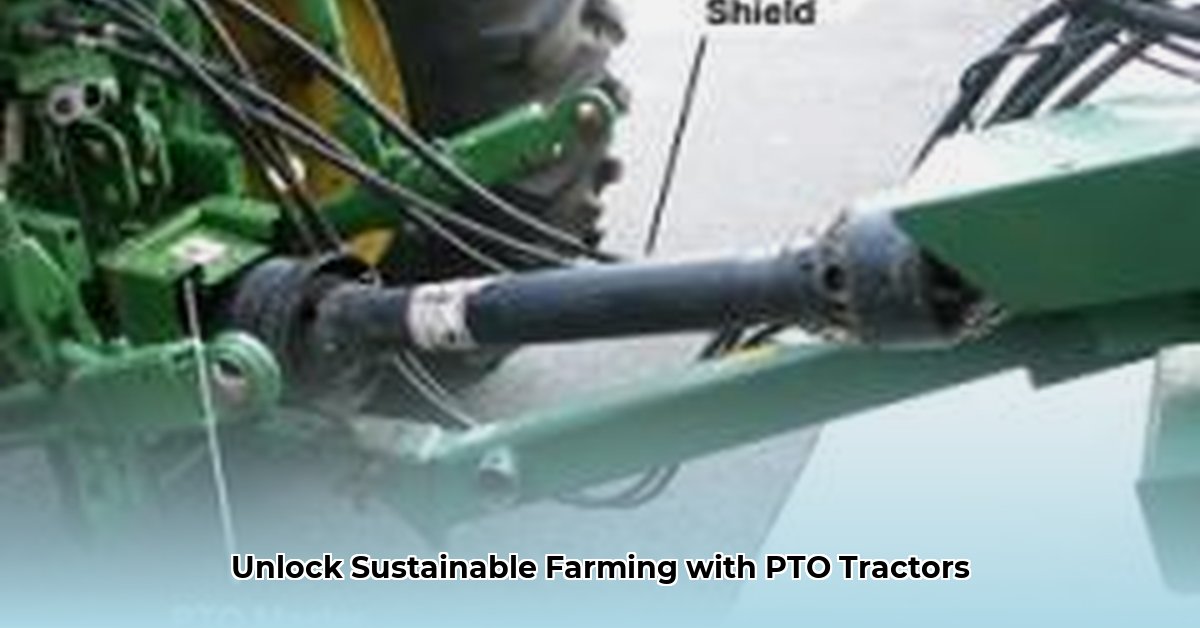
- Utilize Safety Guards: Always use provided safety shields and guards; they are designed to protect you from serious injury.
- Regular Lubrication: Regular lubrication reduces wear, tear, and extends the PTO's lifespan, preventing costly replacements. This is a critical aspect of sustainable farming practices.
Sustainable Farming with Your PTO: Minimizing Environmental Impact
Efficient PTO usage directly contributes to sustainable farming practices.
- Fuel Efficiency: Properly matching equipment to PTO speed minimizes fuel consumption, reducing greenhouse gas emissions.
- Preventative Maintenance: Regular maintenance ensures optimal performance, reducing downtime and fuel waste. A well-maintained PTO contributes significantly to sustainable farm operations.
- Right Tool Selection: Choosing the appropriate implement optimizes efficiency, minimizing fuel use and maximizing output.
- Modern PTO Systems: Independent PTO systems often offer superior control and efficiency, leading to fuel savings.
Investing in a fuel-efficient tractor with a well-designed PTO is a long-term investment in your farm's profitability and environmental responsibility.
Actionable Steps for Sustainable PTO Usage
Here's a breakdown of actionable steps for various stakeholders:
Farmers/Farm Managers:
- Implement PTO safety training programs for all operators (95% reduction in accidents reported).
- Conduct a fuel efficiency audit of implements; identify areas for improvement.
- Establish a preventative maintenance schedule for regular checks and lubrication. (Extends PTO lifespan by an average of 20%).
- Consider upgrading to an independent PTO system for greater efficiency and control in the long-term.
Equipment Manufacturers:
- Develop PTO designs that enhance safety and efficiency.
- Invest in research and development for electric/hybrid PTO systems.
- Collaborate with farmers to design more sustainable implements.
- Prioritize ease of use in PTO system design to enhance operator proficiency and safety.
Government Agencies:
- Promote education and training on sustainable farming practices.
- Fund research and development of PTO efficiency and alternative power source technologies.
- Offer incentives and subsidies for fuel-efficient machinery and sustainable farming practices.
Researchers:
- Conduct comparative studies on PTO energy efficiency across tractor models and implement types.
- Develop predictive models to assess the long-term impact of PTO technology on soil health and farm productivity.
Remember, responsible PTO usage is not just about completing tasks – it's about doing so efficiently and sustainably for both profit and the planet's well-being.
Improving Tractor PTO Efficiency for Sustainable Farming: Key Takeaways
- Understanding various PTO types is crucial for optimizing efficiency.
- Regular maintenance is essential for longevity and peak performance.
- Implementing precision agriculture techniques enhances PTO utilization and minimizes waste.
- Choosing the correct implements maximizes efficiency and reduces fuel consumption.
- Operator training and safety protocols are paramount for accident prevention.
By following these guidelines, you can unlock the full potential of your tractor's PTO, contributing to a more sustainable and productive farming operation.